
 English (UK)
  Italiano
Introduction
Welding and metal fabrication include a wide range of metal processing, assembly and transformation activities carried out in industrial and artisanal settings, as well as on construction sites. These operations can expose workers to various health and safety risks, depending both on the working methods and on the materials and substances used.
Welding fumes, metal dust, optical radiation, heat, noise, sparks and the risk of injury are some of the factors that must be considered when assessing workplace risks.
To work safely, it is therefore essential to implement appropriate preventive measures and use PPE selected according to the specific activities performed and the risks present in the workplace.
Welding and Metal Fabrication: Characteristics of the Sector
Metal fabrication includes all activities aimed at processing, transforming and assembling metal elements used to manufacture structures, components and products.
This sector also includes welding, a technique used to permanently join two or more metal elements by applying heat, with or without the use of filler material.
These activities can be carried out in workshops, manufacturing facilities, construction and industrial sites, or directly at the location where structures are installed. Working conditions can therefore vary significantly, as can the risks to which operators are exposed.
Discover Milla respiratory protective equipment (RPE) for welding and metal fabrication. Click here.
Processes and Activities in Welding and Metal Fabrication
The processes involved in welding and metal fabrication can vary depending on the type of metal, the product being manufactured and the required result.
The main activities include:
- metal cutting, carried out using mechanical tools or thermal processes;
- welding, using different processes and techniques;
- grinding and sanding, used to finish, smooth or prepare surfaces;
- drilling and mechanical processin, required to create holes and prepare components for assembly;
- bending and deformation of metal materials;
- assembly and installation of components and structures;
- deburring and finishing, aimed at removing imperfections and processing residues,
- painting and surface treatments, which may involve additional chemical risks.
The combination of these activities can result in the simultaneous presence of several risk factors and therefore requires a specific assessment of working conditions.
Main Risks in Metalworking
. The risks associated with welding and metal fabrication depend on the processes carried out, the materials used, the equipment involved and the conditions of the working environment.
The main risks include:
- Fumes and dust: welding, cutting, grinding and other processes can generate welding fumes, particles and metal dust that may become airborne in the workplace and cause respiratory problems.
- Optical radiation: certain welding operations can generate artificial optical radiation that may affect the eyes and skin.
- Heat and burns: hot surfaces, molten metal, sparks and spatter can cause burns or other injuries.
- Noise: grinding, cutting, drilling and the use of machinery can generate significant noise levels.
- Mechanical risks: handling materials, using tools and machinery, and working with metal components can involve risks of cuts, crushing, impact and flying particles.
- Electrical risks: some equipment used for welding is electrically powered and requires appropriate safety procedures.
- Chemical substances: surface treatments, paints, solvents and other products used during processing may create additional exposure risks.
Risk assessment must take into account the specific processes involved and the conditions under which they are carried out.
Discover Milla respiratory protective equipment (RPE) for welding and metal fabrication. Click here.
Respiratory Contaminants: Welding Fumes, Metal Dust in Metal fabrication
One of the most important aspects of protecting workers in welding and metal fabrication is air quality in the workplace.
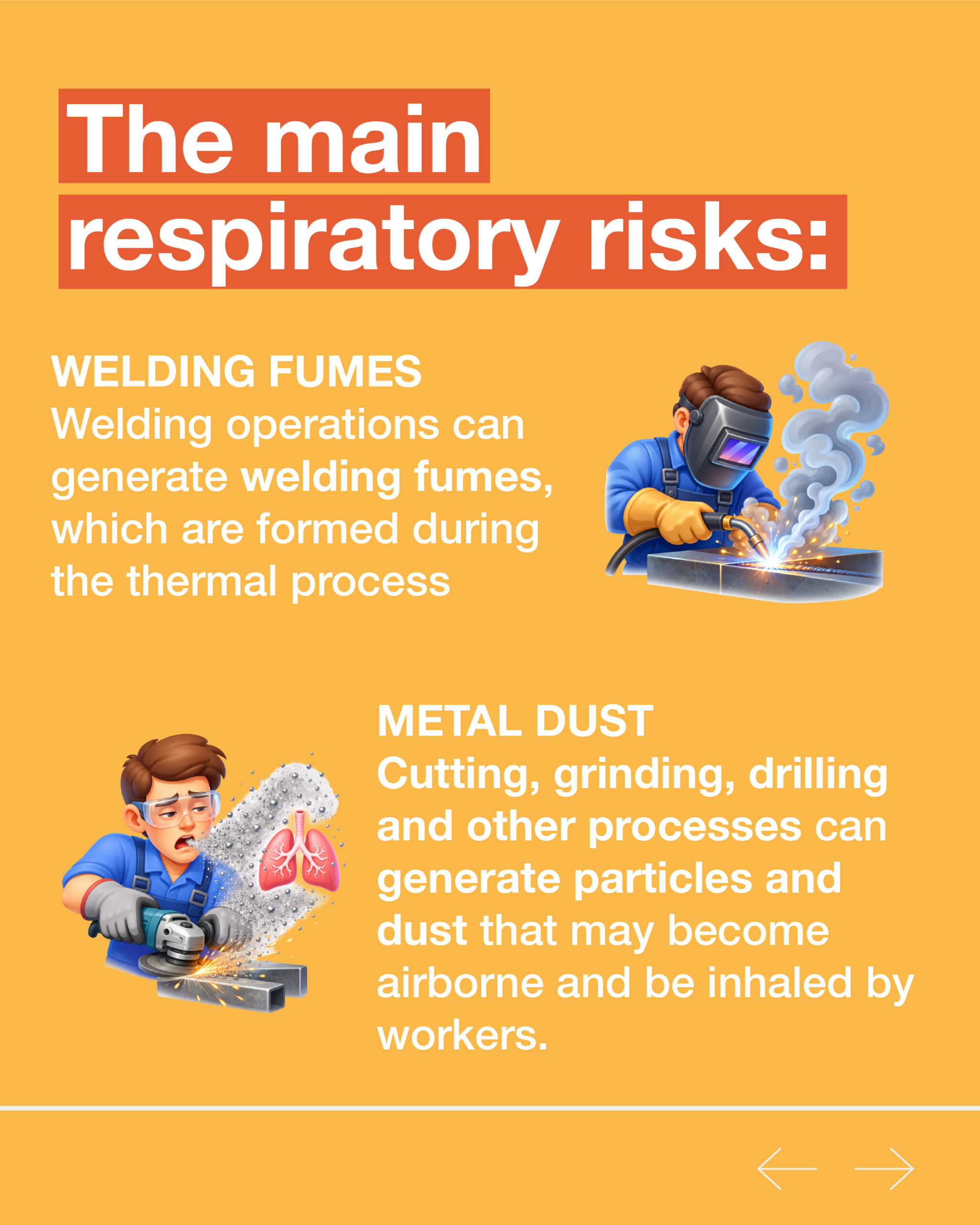
Welding operations can generate welding fumes, consisting of very fine particles formed during the thermal process. The composition of welding fumes can vary depending on the material being processed, the welding process and the consumables used.
Other processes can also generate contaminants: cutting, grinding, sanding and drilling can produce metal dust and particles which, if dispersed into the workplace environment, may be inhaled by operators.
These contaminants may also be accompanied by substances generated by paints, coatings, oils, solvents and surface treatments.
For this reason, correctly identifying the substances and contaminants present is an essential step in determining the most appropriate preventive measures and PPE.
Discover Milla respiratory protective equipment (RPE) for welding and metal fabrication. Click here.
How to prevent risks during welding and metal fabrication activities
Prevention should start with an assessment of the processes involved and the identification of the risks present in the workplace. The objective is to reduce exposure and limit the possibility of accidents or adverse health effects.
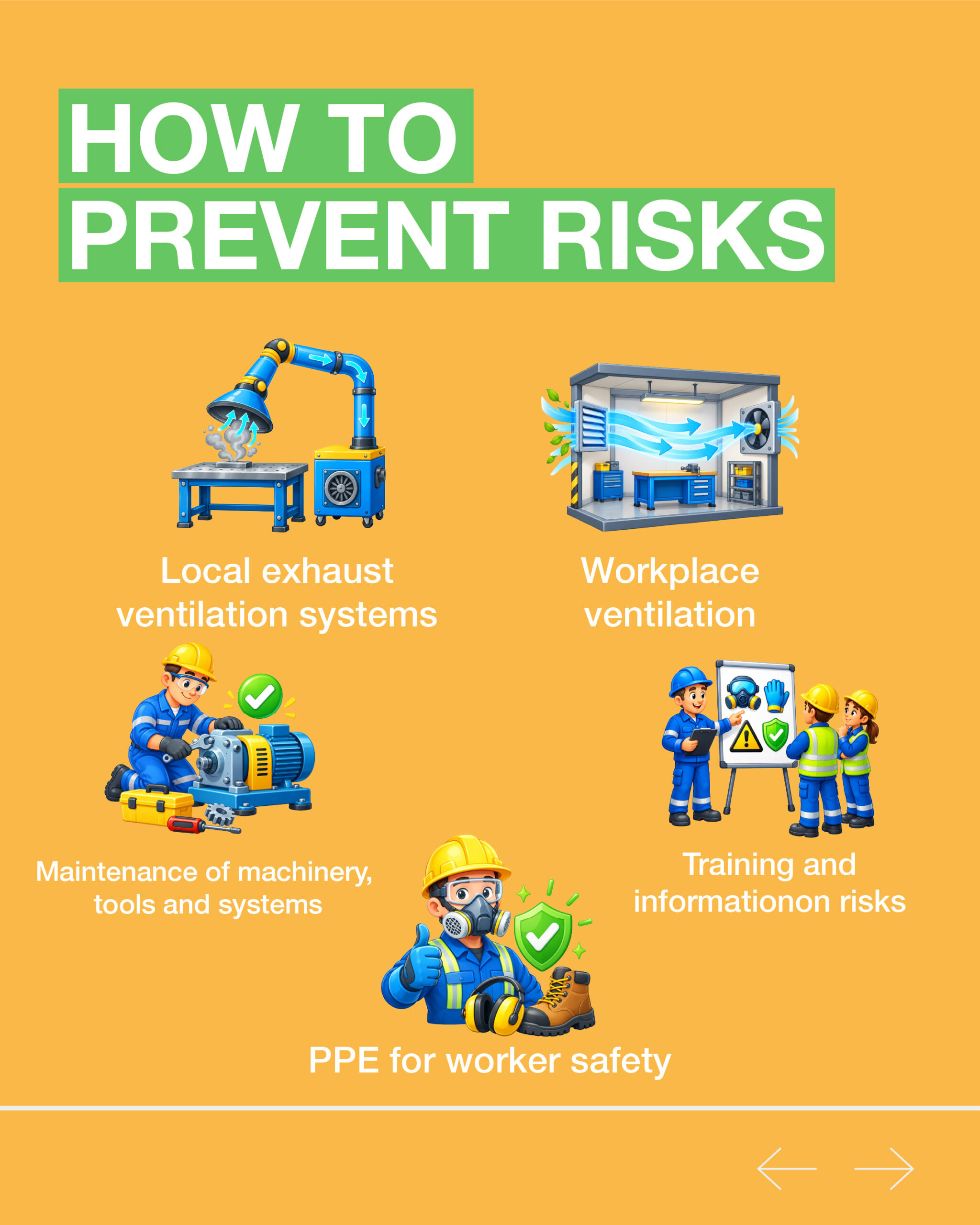
When working with fumes and dust, local exhaust ventilation systems play an important role.These systems are designed to capture contaminants as close as possible to the point where they are generated.Adequate workplace ventilation also contributes to controlling airborne contaminants.
It is also important to keep machinery, tools and extraction systems in good working condition, carrying out the required maintenance regularly.
Work procedures should be defined according to the specific activities, and operators should receive adequate training and information on risks and on the correct use of equipment and PPE.
PPE (personal protective equipment) represents an additional protective measure and must be selected based on the risk assessment, the characteristics of the contaminant and the conditions of use.
What PPE Should Be Used in Welding and Metal Fabrication?
The choice of PPE for welding and metal fabrication must be based on the specific risks associated with each activity.
Respiratory protection
Respiratory protection is required for activities involving fumes, dust and airborne particles.
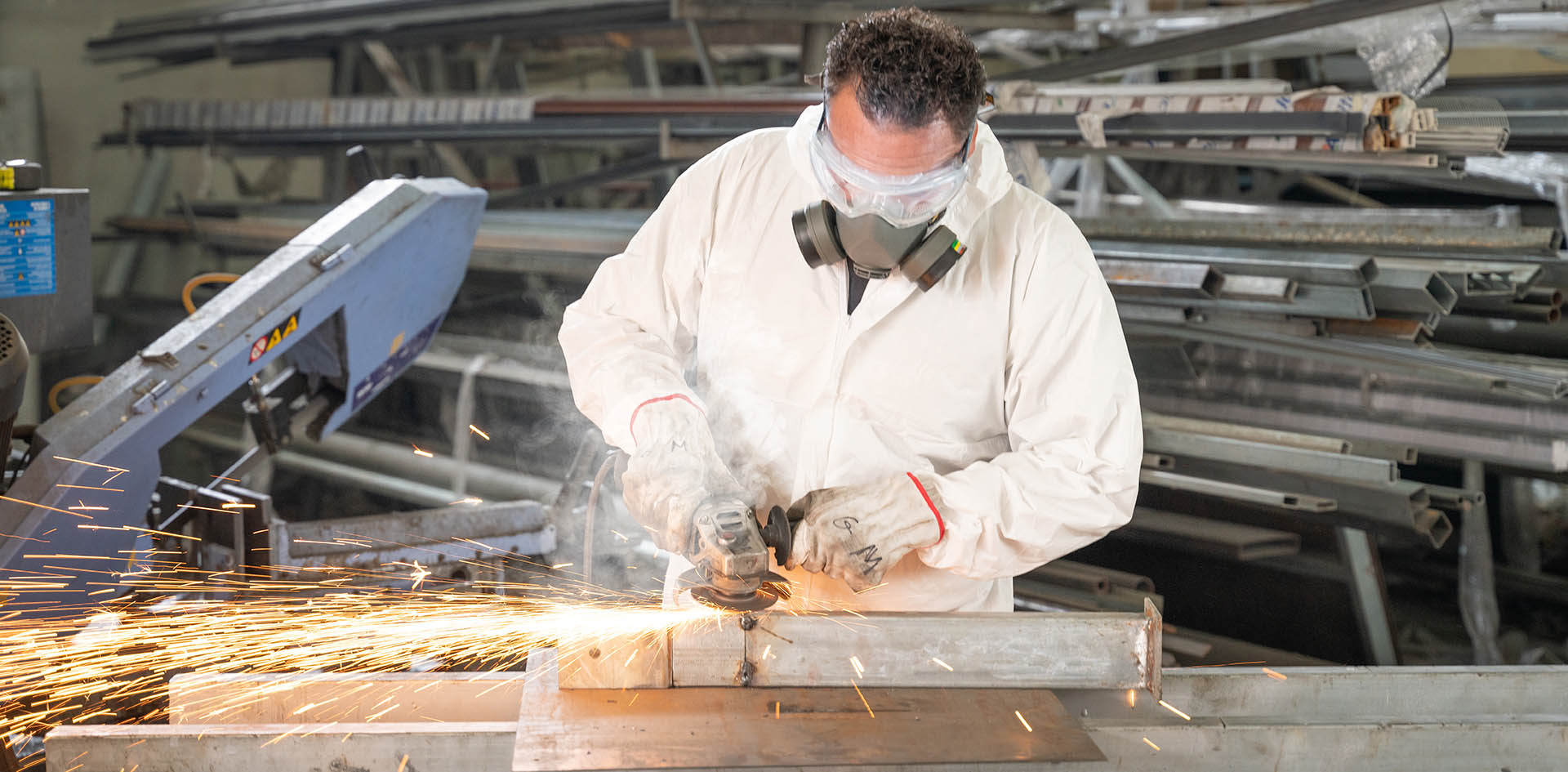
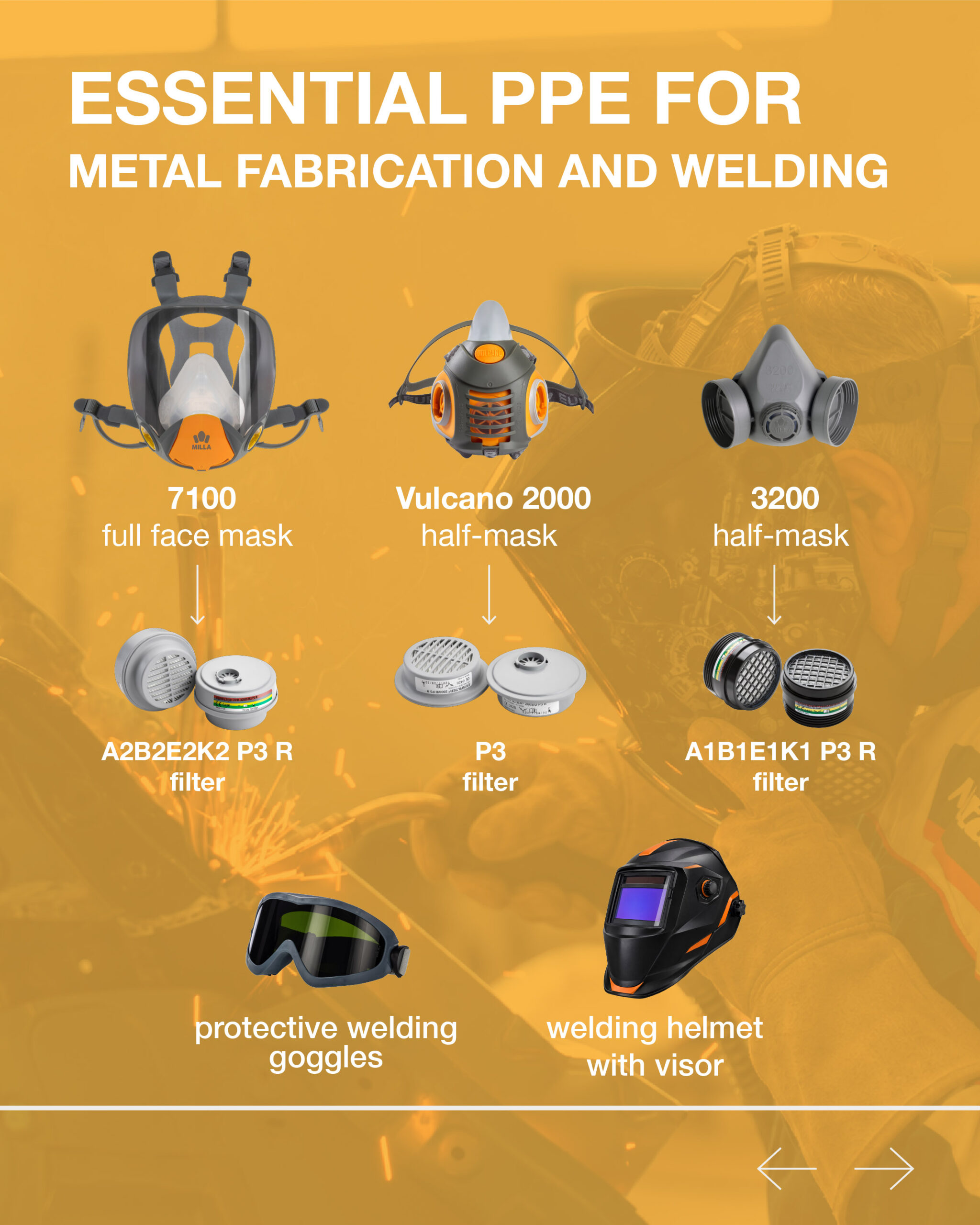
The choice of respiratory protective equipment must take of into account the type of contaminant, its concentration and the working conditions. Depending on the specific requirements, half masks or full-face masks with P3 particulate filters, may be used to protect against dust and metal particles and the particulate component of welding fumes.
When gases or vapours are also present,it may be necessary to use combined gas/vapour and particulate filters, such as ABEK-P filters,depending on the type and characteristics of the contaminants present.
Full-face masks provide protection for both the respiratory system and the eyes through a single device, making them a suitable solution when comprehensive facial protection is required.
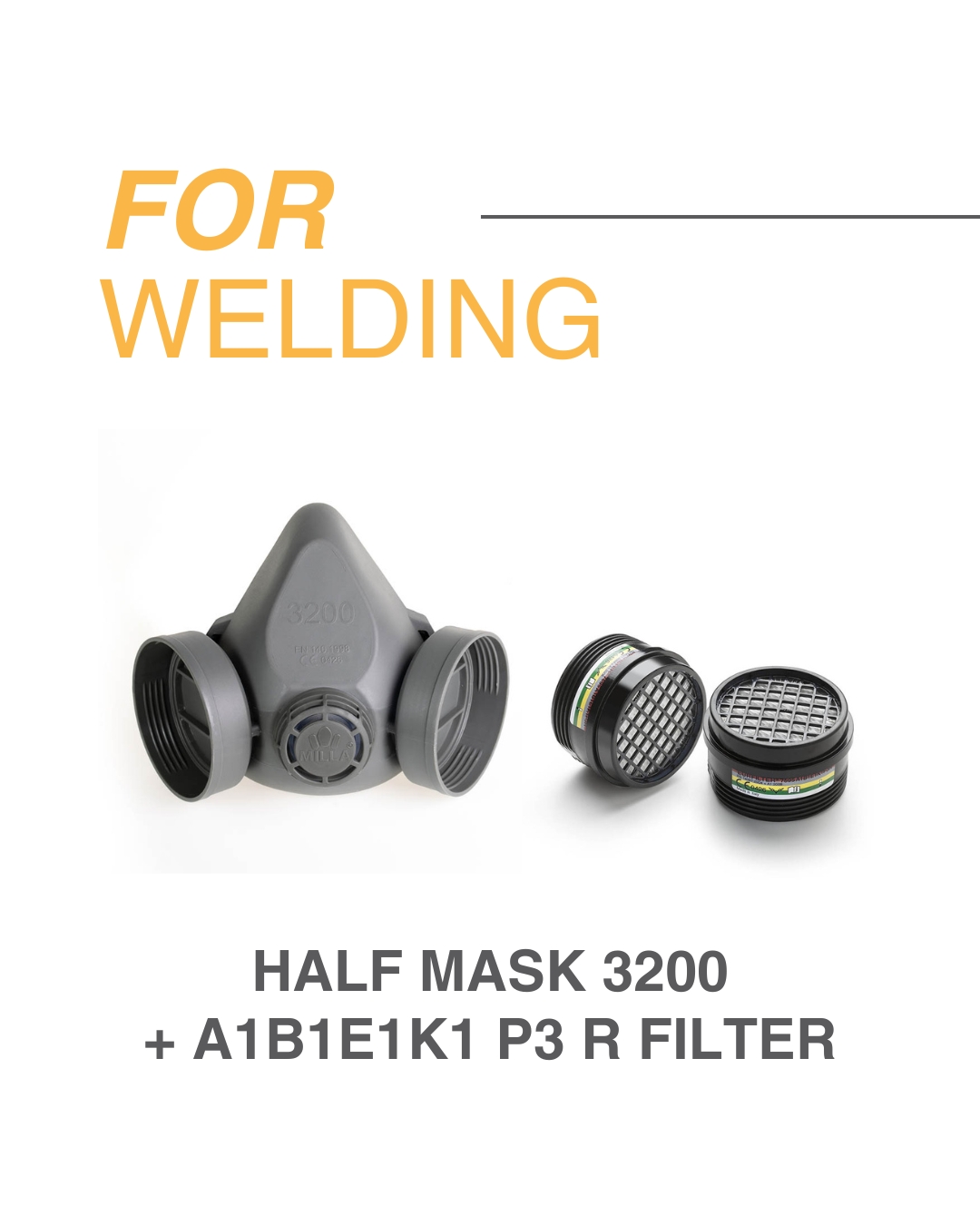
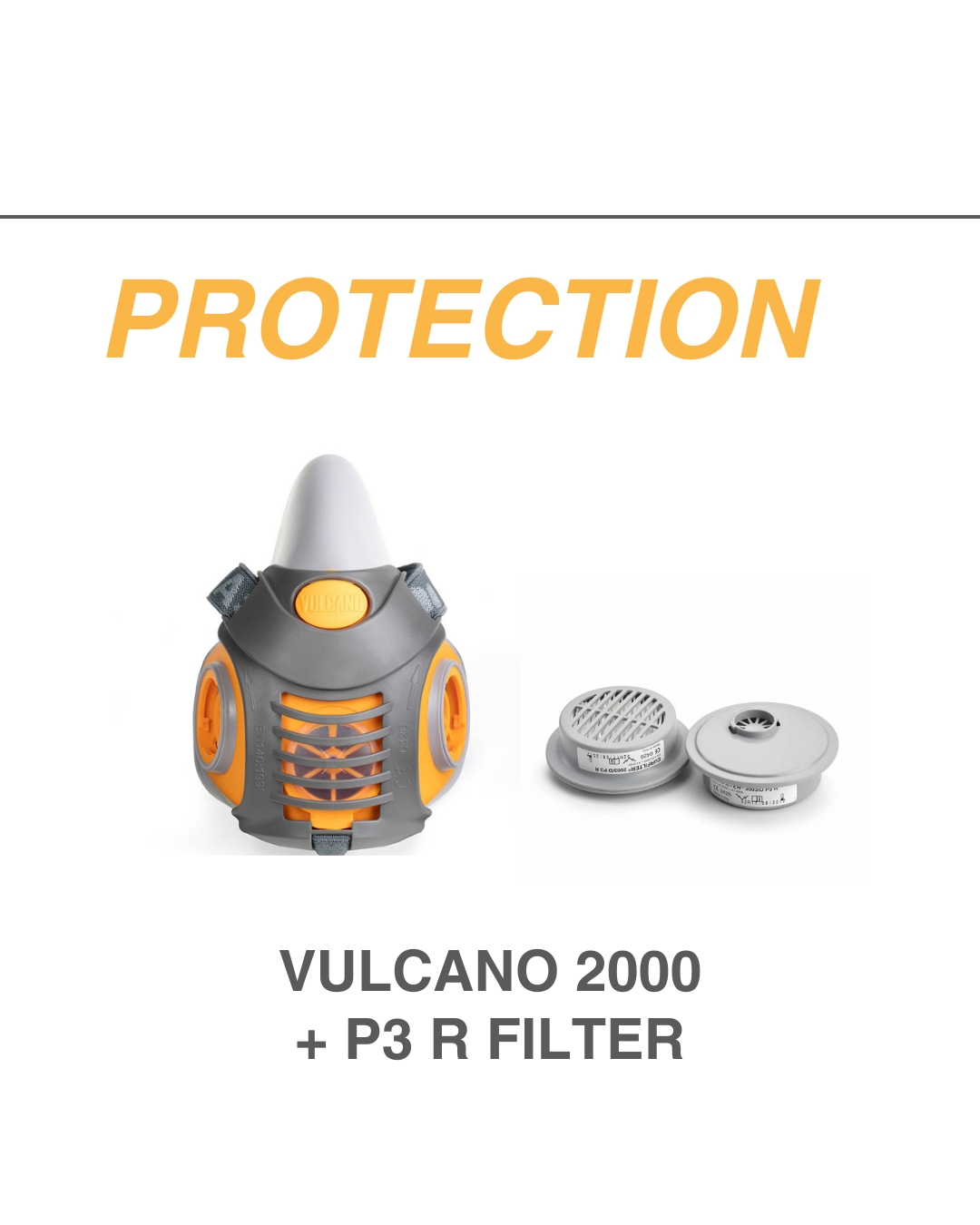
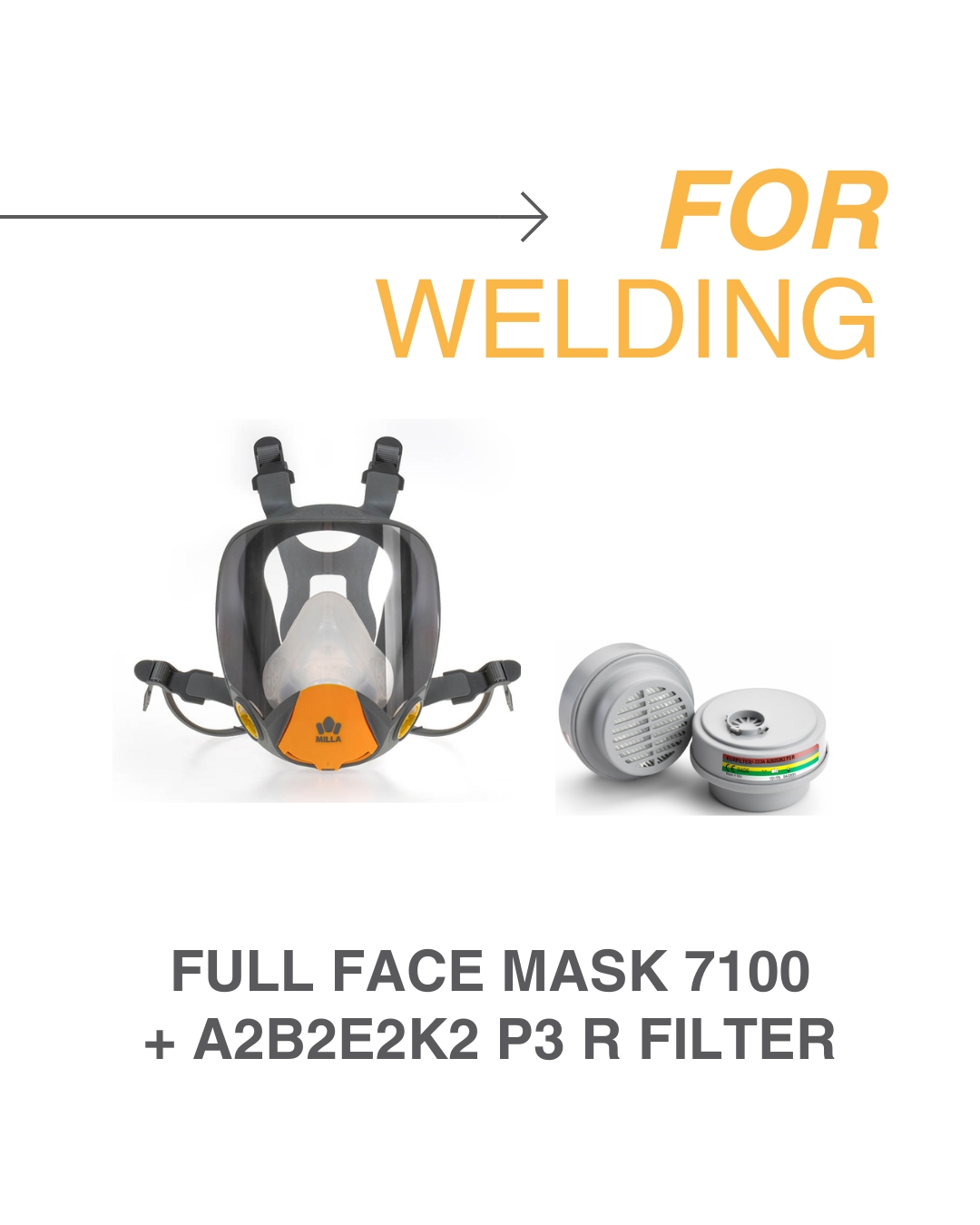
Discover Milla respiratory protective equipment (RPE) for welding and metal fabrication. Click here.
Eye and Face Protection
During welding and certain mechanical processes, it is essential to protect the eyes and face from radiation, sparks, molten metal spatter and particles.
The appropriate protection must be selected according to the specific activity and risk involved, using equipment that meets the requirements applicable to the relevant operation.
Hand and Body Protection
Protective gloves and clothing should protect operators from the specific risks associated with the activity, such as heat, flames, sparks, hot metal, abrasion and cuts.
In welding and metal fabrication, it is particularly important to use gloves and protective clothing designed for this type of activities, paying attention to the protection of the limbs and other areas of the body that are most exposed.
Hearing Protection
Grinding, cutting, drilling and other metalworking activities can generate high noise levels.
When the risk assessment indicates that hearing protection is necessary, devices such as earplugs or earmuffs can be used and selected according to the level and characteristics of exposure.
Other PPE
Depending on the processes and risks identified, other PPE may also be required, including safety footwear, helmets, fall protection equipment and other specific protective devices.
The choice should always be based on the risk assessment and the characteristics of the activity, also taking into account the possibility that several items of PPE may need to be used simultaneously.
Want to learn more? Contact us for a personalized consultation.
