
 English (UK)
 Italiano
Introduction
When mercury vapours are present in the air,, standard gas filters are not enough: the activated carbon in conventional filters cannot reliably retain them.
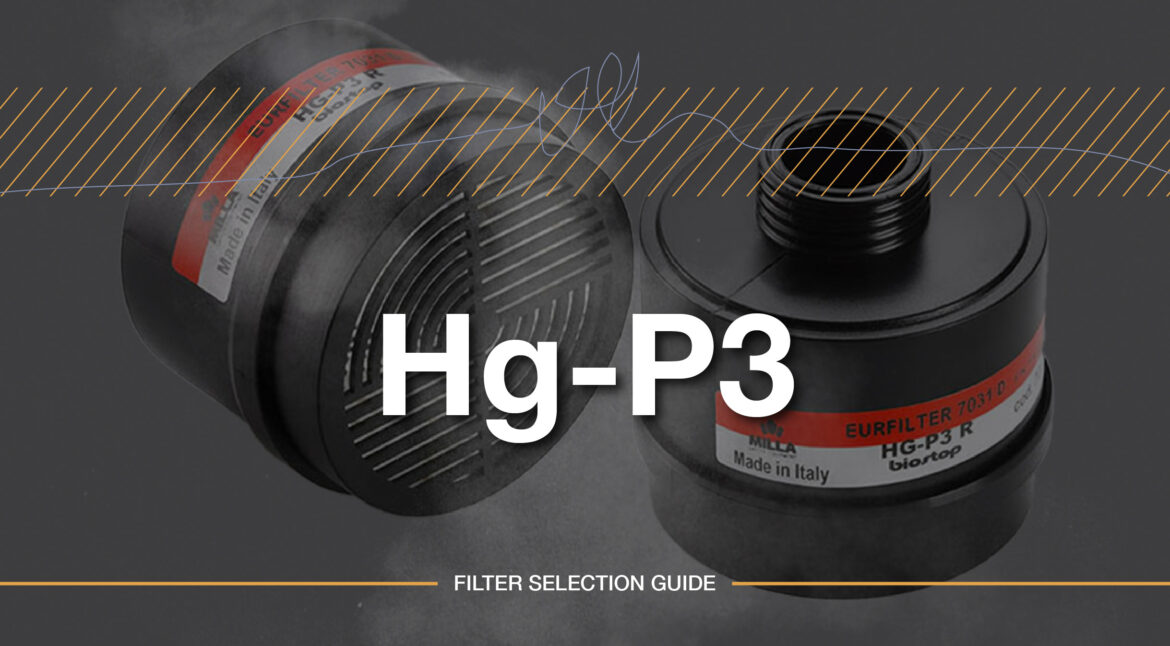
That is why Hg-P3 filters exist. They are combined filters that protect against mercury vapours and, at the same time, against toxic dusts, fumes and mists.
In this article we look at what Hg-P3 filters are, which substances they are used against, in which sectors they are essential and which standards govern their use.
What are Hg-P3 filters
Hg-P3 filters combine two filtration stages in a single element:
- Hg: a layer of specially treated activated carbon designed to capture mercury vapours.
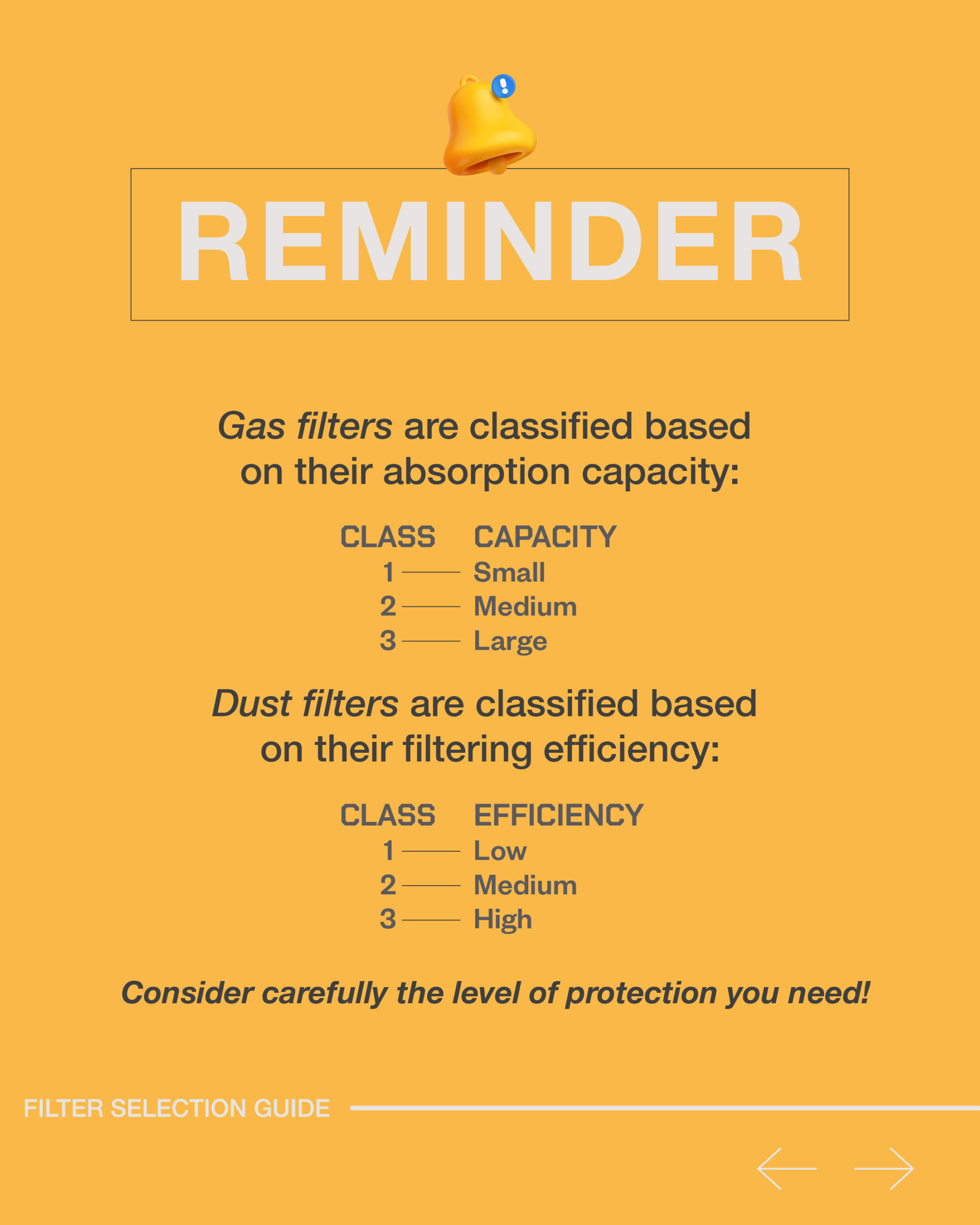
- P3: a high-efficiency particle filter, the highest class under the EN 143 standard, which stops dusts, fumes and mists.
The EN 14387 standard requires the Hg filter to always be combined with a P3 filter.This is why it is sold as Hg-P3: there is no Hg filter sold on its own.
How to recognise them
- Code: Hg-P3
- Label colour: red (Hg) and white (P3)
- Common combinations: Hg-P3 on its own, or with other types, for example A2B2E2K2Hg-P3
The 50-hour limit
Mercury vapours are invisible and odourless. Workers therefore cannot tell on their own when the filter is exhausted, as they can with many solvents.
For this reason, the standard sets a maximum use time of 50 hours,counted from first use. Once this limit is reached, the filter must be replaced, even if it still looks in good condition. It is good practice to note the opening date and hours of use on the filter or in a logbook.
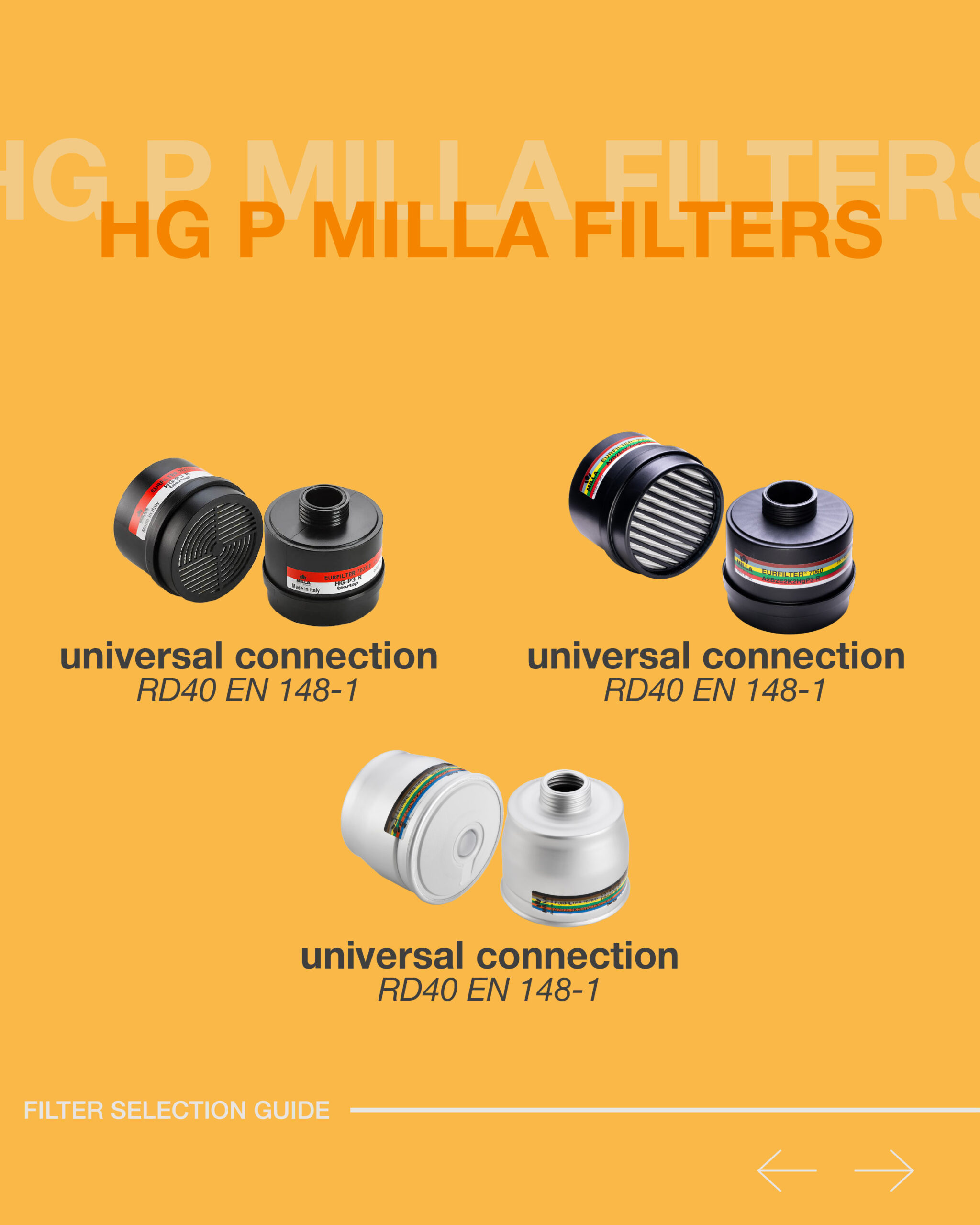
Discover Milla Hg-P3 filters for respiratory protection. Click and scroll through the table.
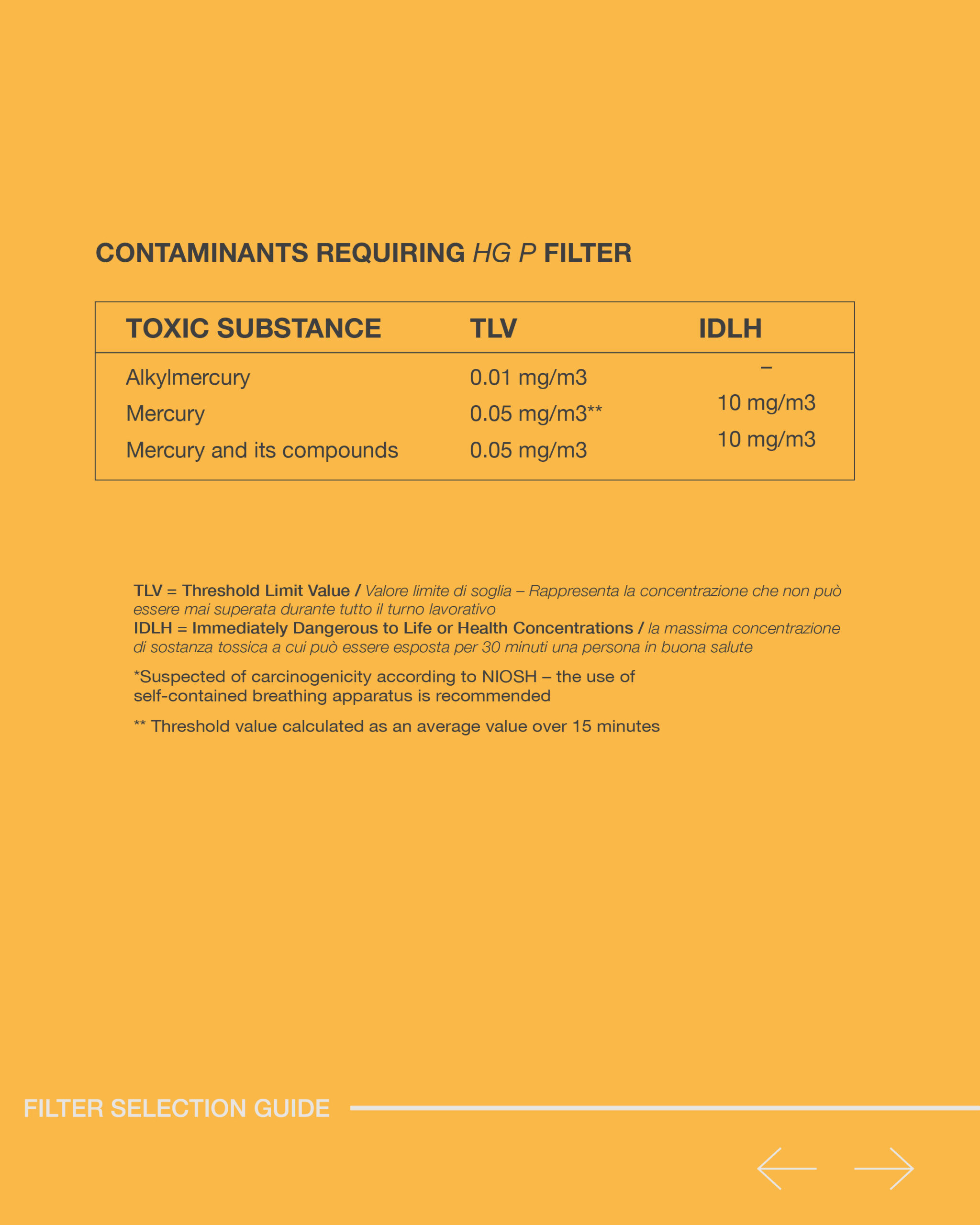
Toxic substances that require Hg-P3 filters
Mercury is the only metal that is liquid at room temperature, and it evaporates even when cold. The Hg stage retains vapours released by lamps, thermometers, pressure gauges and dental amalgam. The P3 stage stops dusts and mists containing mercury, such as glass dust and phosphors from crushed lamps or particles raised from contaminated sludge and soil.
In combined versions, such asABEK-Hg-P3, the filter also protects against other gases and vapours.
The ABEK-Hg-NO-CO-P3 version
The most complete version of HG P filters isABEK-Hg-NO-CO-P3
Each code indicates a specific type of protection. A2 protects against organic gases and vapours with a boiling point above 65 °C, such as solvents. B2 protects against inorganic gases and vapours, such as chlorine, hydrogen sulphide and hydrogen cyanide. E2 protects against acid gases, such as sulphur dioxide, and K2 against ammonia and its organic derivatives. Hg retains mercury vapours, CO carbon monoxide, and NO nitrous gases, i.e. nitrogen oxides.Finally, P3 R stops dusts, fumes and mists.
It is designed for situations where the risks are many or not entirely predictable: chemical plants, industrial emergencies, rescue operations and escape from contaminated environments.
Such broad protection comes with precise limits, however. With carbon monoxide and nitrogen oxides, the filter can be used only once.It does not retain organic vapours with a boiling point below 65 °C and must not be used in the presence of gases or vapours other than those specified. When stored in its original packaging, between -20 and +50 °C and below 80% relative humidity, it has a shelf life of six years from the date of manufacture.
When a filter is not enough
Hg-P3 filters, including the most complete version, must not be used if the oxygen in the air is below 17% or if the mercury concentration is unknown or very high. In these cases, for example in tanks and confined spaces, self-contained breathing apparatus or compressed-air systems are required.
If in doubt about the substances present or their concentration, the choice of device should be made together with the safety manager.
Discover Milla Hg-P3 filters for respiratory protection. Click and scroll through the table.
Applications of Hg-P3 filters
In Europa The use of mercury in Europe is increasingly restricted, but the risk has not disappeared. Today it mainly affects those who dispose of, recycle, decontaminate or maintain plants and materials containing it. The most exposed sectors are:
- WEEE and lamp recycling: crushing of fluorescent lamps, neon tubes and mercury-containing equipment.
- Environmental remediation: contaminated soil, sludge and buildings, and the decommissioning of old chlor-alkali plants.
- Chemical and Petrochemical Industry: maintenance of plants where mercury builds up, including natural gas processing.
- Laboratories: handling of reagents, accidental spills and cleaning of instruments.
- Dental practices: removal of old amalgam fillings and cleaning of amalgam separators.
- Instrumentationrepair or disposal of thermometers, barometers and pressure gauges.
- Waste management and incineration: maintenance of furnaces and flue gas treatment systems.
Standards for Hg-P3 filters
Hg-P3 filters are category III personal protective equipment,, meaning they protect against risks that can cause serious or irreversible harm. There are four key reference standards:
- Regulation (EU) 2016/425: requirements for PPE placed on the market, CE marking and certification by a notified body.
- EN 14387: requirements, testing and marking of gas filters and combined filters, including the Hg-P3 type and the 50-hour limit.
- EN 143: requirements for particle filters, classes P1, P2 and P3.
- Legislative Decree 81/2008: employer obligations regarding chemical risk assessment, provision of PPE, information and training.
Discover Milla Hg-P3 filters for respiratory protection. Click and scroll through the table.
Conclusions
When mercury vapours are present in the workplace, protection must be specific and never left to chance.
Hg-P3 filters provide a double barrier, against mercury vapours and against particles. However, they must be used correctly: respecting the 50-hour limit, choosing the right mask and combining them with other filter types when several substances are present.
Discover the Milla range of Hg-P3 respiratory protection filters, available with the universal RD40 EN 148-1 threaded connection.
For more information, contact us for a personalized consultation.