
 English (UK)
  Italiano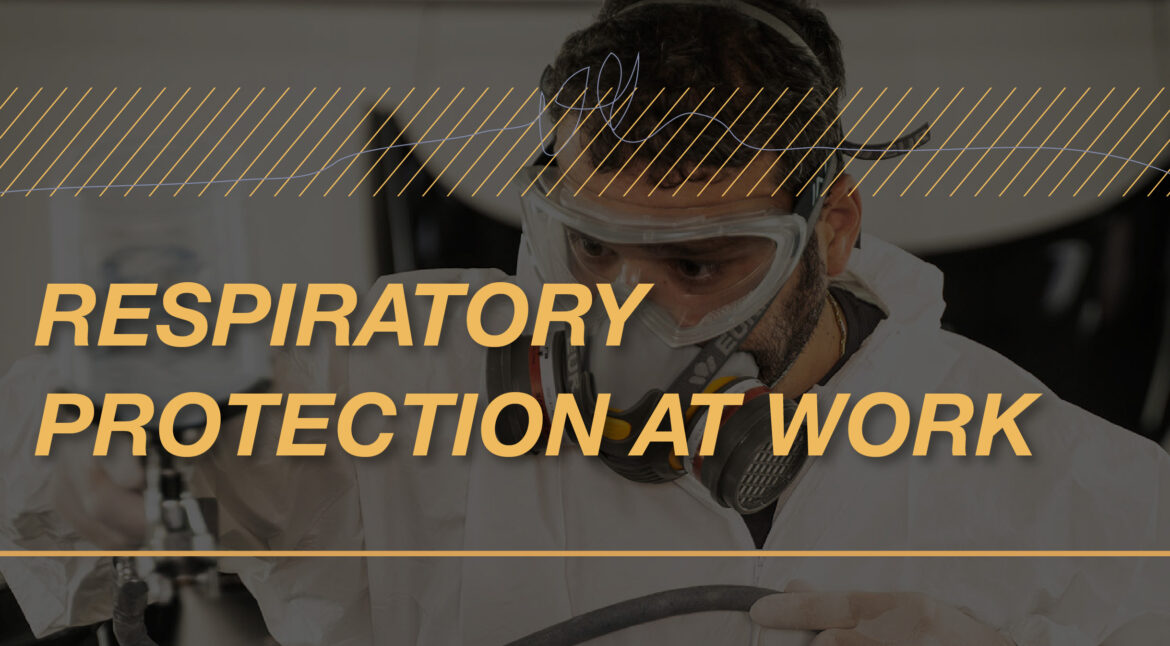
Respiratory protection at work is a topic that is often underestimated.
Unlike other more visible risks, such as physical injuries, exposure to airborne contaminants is invisible, silent, and progressive For this reason, it represents one of the most insidious threats to workers’ health.
Why respiratory protection at work is essential
Breathing is a natural and continuous act: every day, a worker may inhale thousands of liters of air. If that air contains harmful substances, even at low concentrations, long-term exposure can lead to serious health consequences.
The main issue is that:
- many contaminants have no odor or color
- symptoms may appear only after years of exposure
- damage is often irreversible
Among the main diseases related to inhalation of hazardous substances are:
- chronic respiratory diseases (such as bronchitis and occupational asthma)
- damage to the central nervous system
- allergies and sensitization
- cancers (in case of exposure to carcinogenic substances)
Respiratory protection at work is therefore essential to prevent long-term health damage, even when no immediate symptoms are present.
Discover our respiratory protective equipment for the workplace
Main toxic substances to protect against
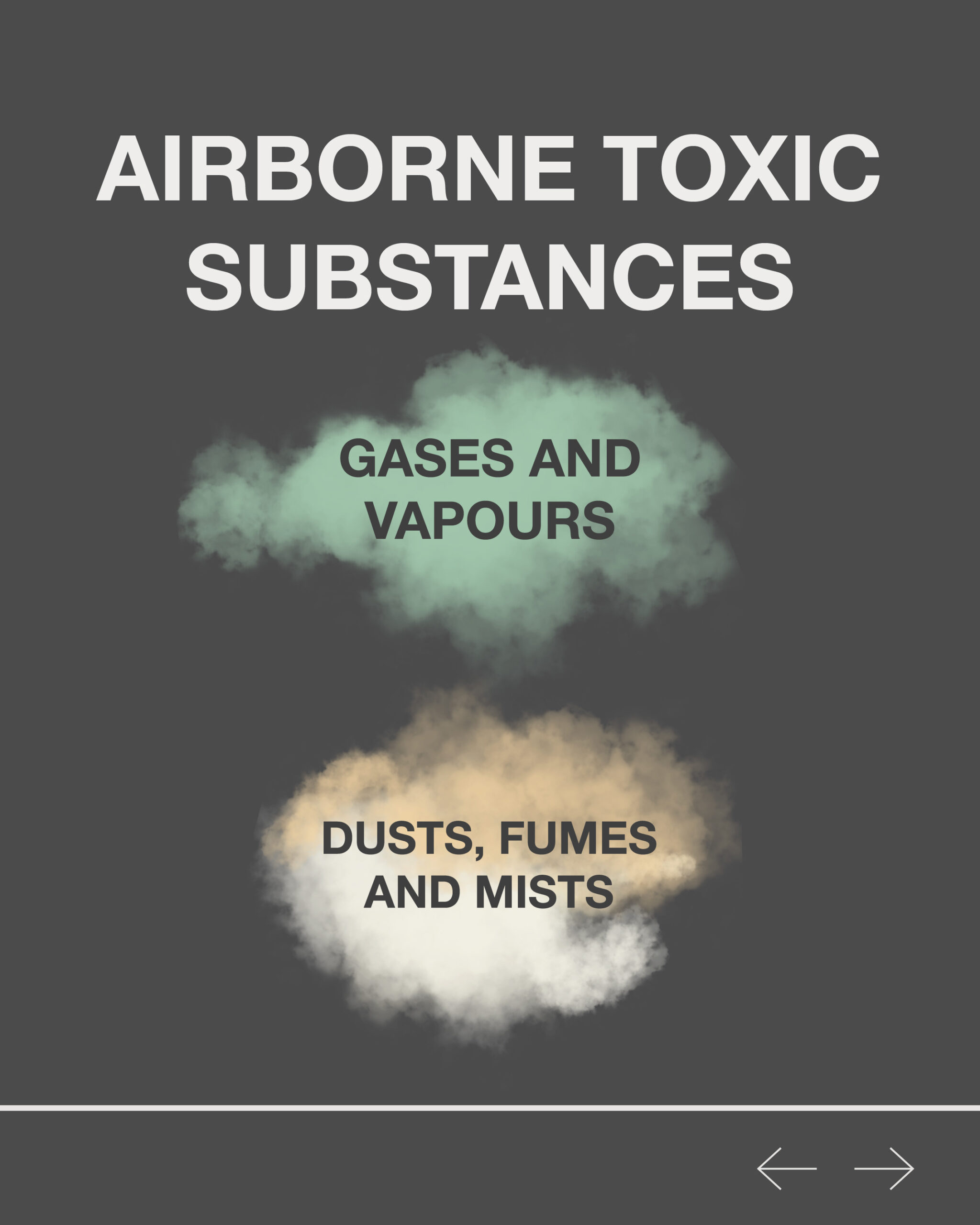
In workplaces, airborne contaminants are divided into two main categories: gases and vapors on one side, and dusts, fumes, and mists on the other.
Understanding their characteristics is the first fundamental step in identifying the most appropriate protective measures, including the correct use of PPE (Personal Protective Equipment).
Gases and Vapours
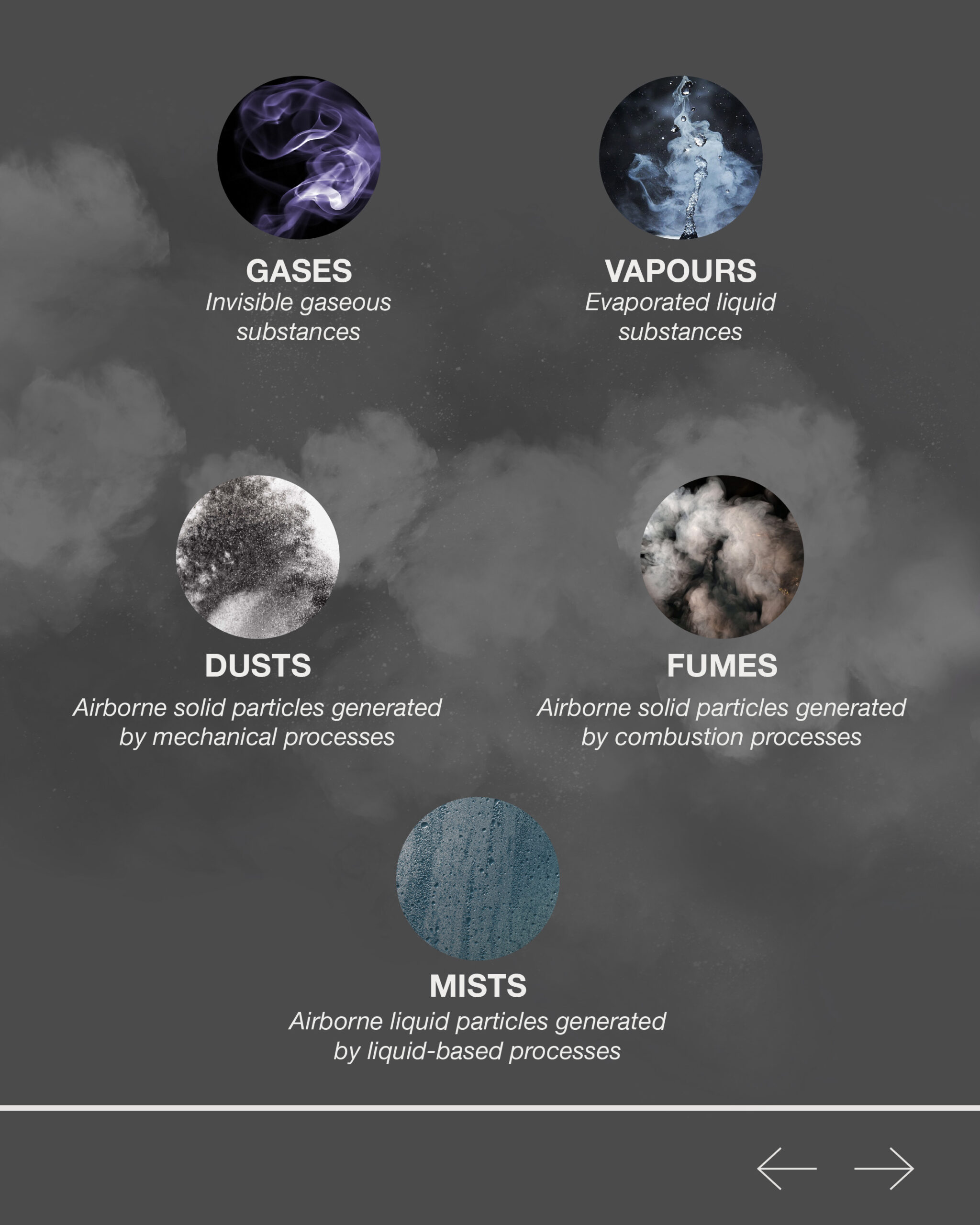
Gases are substances that exist in an airborne state at room temperature.
1. Characteristics:
-completely invisible
-may be odorless or undetectable at low concentrations
-spread rapidly in the environment
2. Examples:
–carbon monoxide (CO)
-hydrogen sulfide (H₂S)
-ammonia (NH₃)
3. Risks:
They can cause asphyxiation, acute poisoning, and damage to internal organs.
Vapours are substances formed bythe evaporation of liquids..
1. Characteristics:
-commonly generated during processes such as industrial painting
-often have an odor, but not always reliably detectable
2. Examples:
–organic solvents (toluene, xilene)
-gasoline and light hydrocarbon vapors
-alcohol vapors (e.g., ethanol, isopropanol)
3. Risks:
Effects on the nervous system (dizziness, nausea), irritation, and liver and kidney damage.
Fumes, Dusts, and Mists
Fumes are very fine solid particles generate da processi di combustione o lavorazioni ad alte temperature.
1. Characteristics:
-microscopic particles suspended in the air
-can penetrate deep into the lungs
2. Examples:
-welding fumes (steel, aluminum, stainless steel)
–thermal cutting fumes (plasma, oxy-fuel, laser cutting of metals)
–combustion fumes (engines, forklifts, industrial vehicles)
3. Risks:
Respiratory diseases, metal fume fever, and exposure to toxic or carcinogenic substances.
Dusts aresolid particles dispersed in the air, generated by mechanical processes.
1. Characteristics:
-visible or invisible depending on particle size
-can settle and be easily resuspended
2. Examples:
-wood dust (carpentry, furniture manufacturing)
-crystalline silica dust (construction, quarries, cement production)
-metal dust (grinding, sanding, mechanical processing)
3. Risks:
Silicosis, allergies, irritation, and chronic lung diseases.
Mists are liquid aerosols made of tiny droplets suspended in the air.
1. Characteristics:
-formed during spraying or liquid-based processes
-common in industrial environments, auto repair shops and body shops
2. Examples:
-mineral oil mists (machining and lathes)
-cutting fluid/emulsion mists (metalworking industry)
-acid or chemical solution mists (pesticides, spray paints, surface treatments, electroplating)
3. Risks:
Respiratory irritation, dermatitis, and possible systemic toxic effects.
Discover our respiratory protective equipment for the workplace
The invisible risk: why it should not be underestimated
One of the most critical aspects is that exposure to airborne contaminants does not produce immediate symptoms.
A worker may feel fine for years while damage slowly accumulates.
This often leads to:
- underestimating the use of respiratory PPE
- neglecting workplace ventilation
- failing to perceive the real risk
In reality, prevention is the only truly effective strategy for ensuring respiratory protection at work.
How to protect yourself effectively
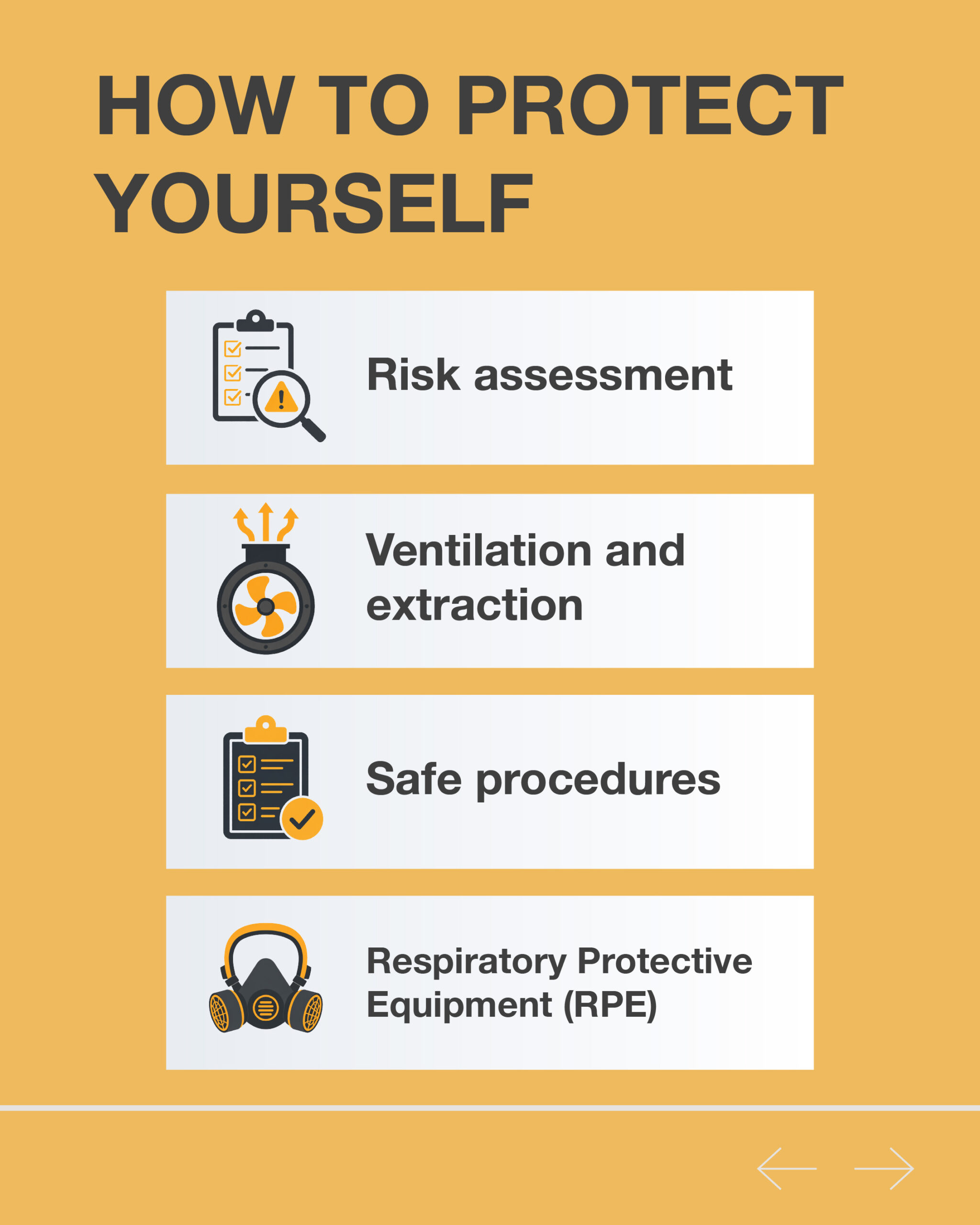
To reduce risk, an integrated approach is essential:
- Risk assessmentidentify airborne contaminants (type and concentration)
- Ventilation and extraction: reduce airborne concentrations
- Safe procedures: limit the dispersion of substances
- Personal Protective Equipment (PPE): use masks or respirators with appropriate filters
The choice of PPE must match the type and concentration of contaminants, using suitable filters for particles, gases, or combined hazards.
Conclusion
Respiratory protection at work is not only a safety measure but a long-term investment in health.
Airborne contaminants represent a mostly invisible risk, but with concrete and potentially severe consequences.
Being aware of why respiratory protection is necessary, understanding toxic substances, and adopting proper preventive measures allows safer working conditions today and in the future.
For more information, contact us for a personalized consultation.
